Menu
close


A beginner-friendly checklist of 15 essential tools for homeowners, from a claw hammer and screwdriver set to a cordless drill, plus tips on tool kits, storage and safety.
EyesMata is reader-supported. Some links on our site may be affiliate links, which means we may earn a small commission at no extra cost to you. Learn more.
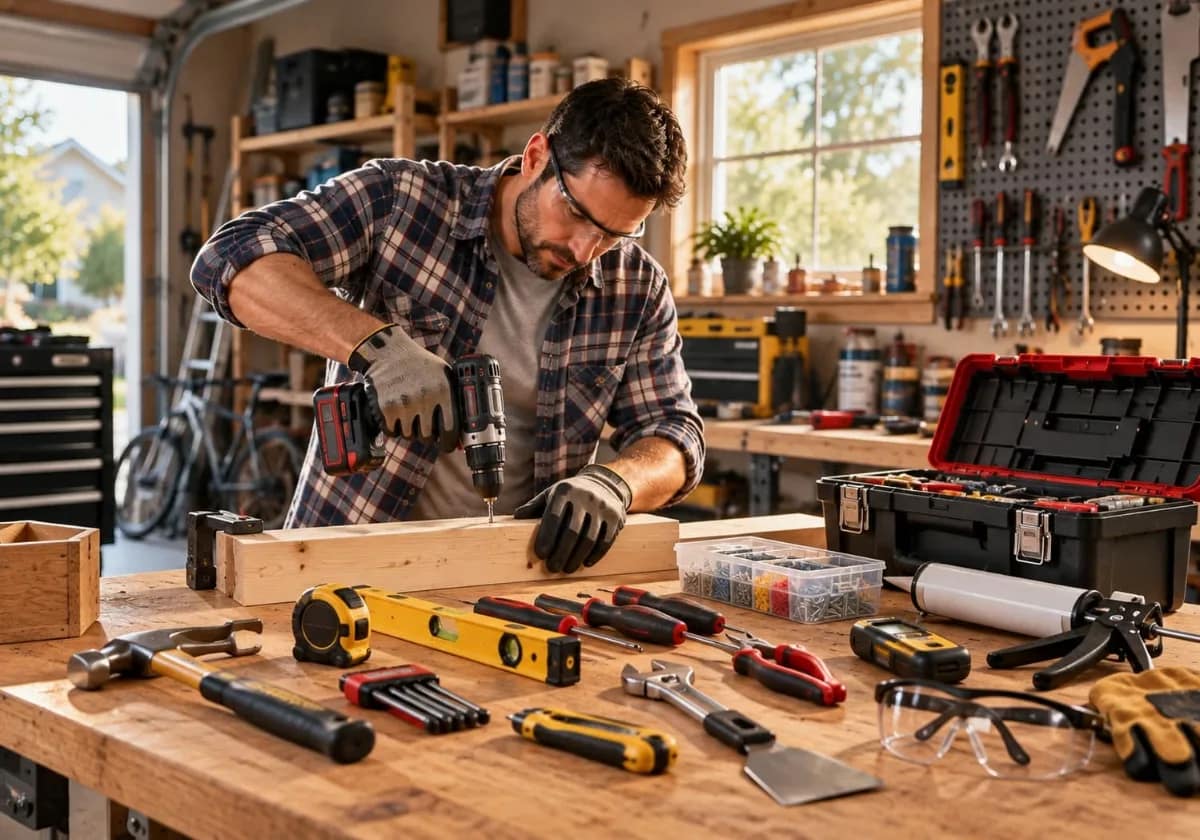
There's always something around the house that needs a little attention: a loose cabinet handle, a picture that needs hanging, a door that squeaks every time you open it. Most of these small jobs don't need a contractor. They just need the right tool within reach.
The good news is that you don't need a garage full of expensive equipment. This guide covers 15 essential tools for homeowners, the must-have basics that handle most everyday repairs, furniture assembly and small home projects. Whether you just moved into your first home or you're finally building a proper toolbox, it's a practical place to start.
Here's the full checklist. Each tool is explained in more detail below.
You don't have to be handy to get a lot out of a few basic tools. Tightening a loose doorknob, replacing a cabinet handle or hanging a shelf is much easier when a basic tool kit is already on hand, and you'll save extra trips to the hardware store.
Having the right tools also makes you more likely to fix small problems before they turn into bigger, more expensive ones. Start with the essentials and add to your collection as your projects grow.
These six hand tools handle the majority of everyday fixes around the house.
A claw hammer drives nails for hanging pictures and building small wooden projects, while the curved claw on the back pulls them out when something needs adjusting.
What to look for: A 16-ounce claw hammer suits most household jobs without feeling bulky. Choose a comfortable, well-balanced grip. Fiberglass handles are durable and help absorb some of the vibration from repeated swings.
Tip: You don't need a heavier framing hammer unless you're planning bigger construction projects.
You'll probably reach for a screwdriver almost every week, whether you're tightening cabinet handles, adjusting door hinges or assembling flat-pack furniture.
What to look for: A set with both Phillips (cross-shaped tip) and flathead (single straight blade) screwdrivers in several sizes. A magnetic tip helps with small screws in tight spots, and a multi-bit screwdriver saves space if storage is limited.
Tip: Always match the screwdriver to the screw head. The wrong size can strip the screw and turn a simple repair into a much harder one.
An adjustable wrench grips nuts and bolts of different sizes, so one tool can stand in for a whole set. It's handy for furniture assembly, household fixtures and outdoor equipment.
What to look for: An 8-inch wrench is a good starting size, with a smooth adjustment wheel and a comfortable handle.
Tip: Make sure the jaws fit snugly before you turn. A loose fit can slip and round off the edges. On plumbing fixtures with delicate finishes, protect the surface or use a tool designed for that fixture.
Pliers grip, hold and bend small objects more securely than your fingers can. Three especially useful types are:
What to look for: A few well-made pliers with comfortable handles cover most household tasks. You don't need a large professional set to get started.
Safety note: Never use ordinary pliers on live electrical wiring. Leave electrical repairs to someone with the right training and equipment.
Also called an Allen wrench, a hex key is the small L-shaped tool that turns screws with a six-sided socket. If you've assembled flat-pack furniture, you've already used one.
What to look for: A set with both SAE (inch) and metric sizes, since furniture and equipment come from manufacturers around the world. A folding set keeps every size in one place, so you're not stuck when the wrench that came with your bookcase goes missing.
A utility knife opens packages, cuts cardboard, trims certain materials and helps prepare supplies for small projects. Unlike a kitchen knife, it's built for controlled cutting and uses replaceable blades.
What to look for: A retractable model with a comfortable grip and a secure blade lock.
Safety tip: Always cut away from your body and work on a suitable cutting surface. Replace dull blades instead of pressing harder, which increases the chance of slipping.
Accurate measurements and straight lines are what make a DIY project look finished.
Measure before you buy furniture, install a shelf or start any project, and you'll avoid discovering that your new bookcase doesn't fit the wall you planned for it.
What to look for: A 25-foot tape measure covers most rooms, furniture, windows and small outdoor spaces. Choose clear markings in feet and inches (metric on the same tape is a bonus), a sturdy blade and a reliable lock.
Tip: Measure twice before you cut, drill or buy materials. Those extra few seconds can save you from an expensive mistake.
A spirit level uses a bubble inside a liquid-filled vial to show whether a surface is level (horizontal) or plumb (vertical), so pictures, shelves and cabinets don't end up crooked.
What to look for: A compact 9-inch torpedo level is easy to store and fine for small jobs. If you plan to hang longer shelves, a longer level is more practical. Choose easy-to-read vials and a sturdy frame.
Before you hang shelves, a wall cabinet or anything heavy, you need to know what's behind the wall. A stud finder helps locate wood or metal framing behind certain wall surfaces, and many electronic models beep or light up when they detect a change.
Safety note: A stud finder can't guarantee an area is free of wiring, pipes or other hidden obstacles. Follow the manufacturer's instructions, make sure your mounting method suits both the wall and the weight of the item, and get professional help for heavy installations or walls you're unsure about.
A cordless drill makes assembling furniture, installing hardware and drilling holes much faster than doing everything by hand. If you've ever built flat-pack furniture with a manual screwdriver, you'll notice the difference.
What to look for: A compact 12V drill is easy to handle in tight spaces, while an 18V/20V-class model offers more power for tougher jobs. Look for adjustable speed settings, an adjustable clutch (which helps keep you from overtightening screws) and a comfortable grip. A kit with a battery, charger and a few basic bits is convenient if you're starting from scratch.
Safety tip: Before drilling into a wall, check for hidden electrical wiring, plumbing and other hazards. If you're not sure what's behind the surface, don't drill until you can confirm it's safe.
A putty knife applies and smooths spackling compound over small nail holes, dents and scuffs, so you can sand and repaint the spot once it dries.
What to look for: A flexible blade about 1.5 to 3 inches wide works for most small household jobs. Larger wall repairs call for a wider taping knife and extra supplies.
Over time, the caulk around sinks, tubs and other fixtures can crack or pull away. A caulking gun lets you lay down a smooth, even bead of new sealant.
What to look for: A standard manual caulking gun with a comfortable trigger is enough for occasional use. A dripless model helps reduce mess.
Tip: Clean and prepare the surface first, and choose a sealant made for that location and material. Caulk isn't a fix for an active plumbing leak or underlying water damage. Those problems need to be repaired first.
Not every repair happens in a bright room. A flashlight or work light helps when you're looking under a sink, inside a cabinet or into a dark corner of the garage.
What to look for: Good brightness and sturdy construction. For hands-free work, a rechargeable light with a stand, magnetic base or hanging hook is especially handy. It's also smart to keep a separate flashlight with working batteries for power outages.
Even simple projects can involve sharp edges, flying debris, dust or rough materials, so safety gear deserves a permanent spot in your toolbox.
What to look for: Eye protection marked as meeting the ANSI/ISEA Z87.1 standard and suited to the hazards involved, plus work gloves made for the type of job you're doing.
Safety note: Don't wear gloves around rotating machinery, where they could get caught in moving parts. Protective gear doesn't replace safe working habits or the instructions that come with your tools.
Once you start collecting tools, you need a place to keep them. A sturdy toolbox protects your equipment and makes it easy to find what you need when something breaks.
What to look for: A portable toolbox with a carrying handle and separate compartments is enough for a basic collection. As your tools grow, consider a modular storage system or a wall-mounted organizer in the garage.
Buying tools one at a time lets you choose the features and quality that matter most to you. A complete homeowner tool kit is convenient if you don't own any tools yet, since many kits bundle common hand tools in a portable case, and some larger sets add drill bits, a socket set or even a cordless drill.
Before you buy a basic tool kit, check the contents carefully. A high piece count often includes lots of small bits or sockets, so judge a kit by the usefulness and quality of what's inside, not the number on the box.
If you'd rather build your collection gradually, this order works well for most new homeowners:
A few simple habits keep your tools in good shape and ready for the next job:
Start with a claw hammer, screwdriver set, tape measure, pliers and utility knife, plus safety glasses and work gloves. A cordless drill is a valuable next step if you often assemble furniture or take on small DIY projects.
A basic household tool kit should include common hand tools, measuring tools and safety gear. Depending on your needs, you may also want a cordless drill, spirit level, hex key set and portable work light.
Not necessarily. A manual screwdriver set may be enough for occasional repairs, but a cordless drill makes furniture assembly and repetitive screw-driving much faster.
A complete kit is convenient if you're starting from zero. Individual tools give you more control over sizes, features and quality. Your budget and planned projects should guide the choice.
There's no set amount. Start with a few reliable tools you'll use regularly and add more as your needs change.
A good DIY tool kit isn't about owning the most expensive equipment. It's about having the right tools ready when everyday repairs come up.
Start with the basics, choose tools that feel comfortable to use and expand your collection as you take on new projects. With these tools every homeowner should have, plus a few good safety habits, you'll be ready to handle many of the small jobs that come with owning a home.
