Menu
close


Create a safe space for dogs and cats with the right spot, soft bedding, noise control and pet-safe surroundings, plus simple ways to help your pet relax.
EyesMata is reader-supported. Some links on our site may be affiliate links, which means we may earn a small commission at no extra cost to you. Learn more.
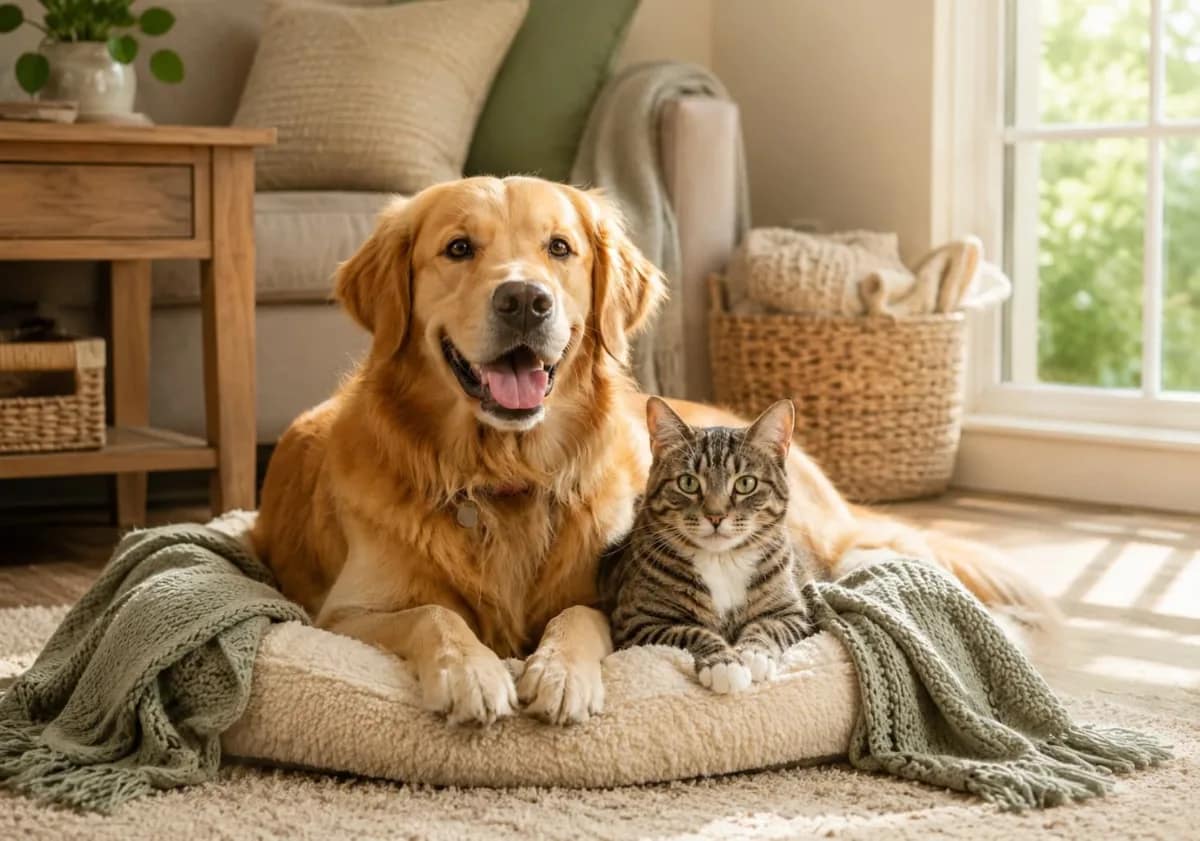
Every pet needs a place to unwind. A safe space for dogs and cats doesn't require a room makeover or expensive gear. It's simply a quiet, comfortable spot where your pet can rest, recharge, and step away from the noise and busyness of everyday life.
Some pets choose a corner of the couch, a bed near the family, or a high shelf by the window. Others need a little help finding a spot that feels secure. This guide walks you through seven practical steps to create a calm space at home, with tips for both dogs and cats, simple safety checks, and signs that your pet may need extra support.
Even relaxed, confident pets get tired, overstimulated, or nervous sometimes. Guests arrive, kids play loudly, storms roll through, or a new routine starts. A dedicated safe space for dogs and cats gives them a choice: they can stay close to the action or retreat to a spot where they know they won't be bothered.
That sense of choice matters. Veterinary guidelines for cats list a safe place as one of their core environmental needs. Animal welfare groups also recommend that household members and guests leave a resting dog alone. When everyone in the home respects that space, your pet learns that it's truly theirs.
Here are the seven steps covered in this guide:
Start by watching where your pet already likes to rest. Those favorite spots are often the best clue to what feels comfortable.
Most dogs like to be near their people without being in the middle of foot traffic. A quiet corner of the living room, a bedroom, or a home office often works well. Try to keep the bed away from the front door, busy hallways, loud appliances, and drafty or overly warm spots near vents. The space doesn't need to be isolated. It just needs to be calm enough that your dog can settle when they want to rest.
Cats often feel safest when they can watch the room from above or tuck themselves out of sight. According to the AAFP and ISFM feline environmental guidelines, many cats prefer a raised retreat, and simple options like cardboard boxes, carriers, perches, and hideaway spots all work. A sturdy cat tree, a cleared shelf, or a covered bed in a quiet room can make a simple safe space for cats that's easy to reach.
A comfortable bed makes the space inviting, but the right choice depends on your pet's size, age, and habits.
Pick a bed, mat, or blanket that lets your pet stretch out or curl up comfortably. Some dogs like to sprawl, while others prefer a bed with raised sides to lean against. Many cats enjoy a soft bed tucked into a box or a covered spot. Choose washable bedding that suits your pet's size and chewing habits. If your dog tends to shred beds, skip stuffed cushions and offer a sturdy mat until the chewing stops. Older pets may appreciate a bed with a low entry that's easy to step into.
Wash bedding regularly and keep the area dry. Damp, dirty bedding can become uncomfortable quickly, and a sudden change in where your pet chooses to sleep can be a small sign that something feels off. Our daily pet care checklist includes a quick look at your pet's resting spot as part of a simple everyday routine.
Smell plays a big role in how safe a space feels. Add one or two familiar items, such as a favorite blanket, a well-loved toy, or an old T-shirt that smells like you. These familiar textures and scents can help a new bed or spot feel recognizable.
Keep it simple. A pile of toys and blankets can make the space cramped, and your pet still needs room to lie down, turn around, and stretch. For cats, the feline guidelines also suggest thinking about how strong smells, such as certain cleaners, could affect your cat's sensitive nose. Washing bedding with a mild detergent and rinsing well is a good habit for both cats and dogs.
A calm space should also be a safe one. Before your pet settles in, get down to their eye level and look around.
The ASPCA's tips for preparing your home for a new pet suggest picking up small items like hair ties, rubber bands, coins, and plastic bags. They also point out that electrical cords can cause electrocution if chewed, and that blind cords, curtain tie-backs, and long strings can be risky too. Tuck cords out of reach or bind them securely, and keep string-like toys put away when you're not supervising play.
Many houseplants are toxic to pets, so check any plants near the resting area. Lilies deserve special caution in homes with cats. The FDA explains that true lilies and daylilies are very dangerous for cats, and that every part of the plant, including the pollen and even the water in a vase, is toxic. Keep medications, cleaning products, and trash behind closed doors, and consider child-proof latches for low cabinets.
If you think your pet has swallowed something harmful, call your veterinarian or the ASPCA Animal Poison Control Center at (888) 426-4435 right away. A consultation fee may apply. A quick home safety sweep each day can help you catch new hazards before they become a problem.
If your cat's favorite perch is near a window, make sure it has a sturdy, snug screen. The ASPCA's high-rise syndrome tips note that childproof window guards aren't enough on their own, because cats can slip through them. Secure tall furniture that a pet could climb or bump into, and fix a wobbly shelf or furniture joint before it becomes a hazard. Keep beds a safe distance from space heaters, fireplaces, and other heat sources, and never leave pets unsupervised near them.
A safe space should never feel like a trap. Keep pathways clear, avoid blocking the area with furniture, and make sure your pet can leave whenever they want.
A crate isn't required for every pet. Some dogs love a covered crate as a cozy den, while others are perfectly happy with a bed in a quiet corner. If you do use one, Humane World for Animals' crate training guide recommends a crate large enough for your dog to stand up and turn around, soft bedding, and a calm location. Leave the door open when you're home so your dog can come and go, and never use the crate as punishment.
A crate also isn't a fix for separation anxiety, and a dog who panics in one could get hurt trying to escape. If you drape a blanket over a crate, leave plenty of space for airflow.
When you have more than one pet, each one needs a place to get away. The feline guidelines recommend having at least as many safe spaces as you have cats, ideally with more than one entrance so one cat can't corner another. They also suggest keeping key resources apart, so food bowls shouldn't sit right next to the litter box. In homes with dogs and cats, give your cat high perches or a gated room the dog can't reach, so your cat always has an escape route.
Storms, fireworks, construction, and parties can turn an ordinary day into a stressful one. A familiar safe space is one of the best tools you have.
The American Animal Hospital Association's guide to noise aversion in pets suggests setting up a quiet, comfortable room with few windows and filling it with familiar toys and bedding. Introduce the space well before noisy events so your pet already knows it. During the noise, close windows and curtains, play calming music or white noise, and stay calm yourself. Speak in a normal voice and avoid fast, rapid petting, which can increase anxiety.
According to AAHA, signs of noise-related stress can include:
If you notice these signs, mention them to your veterinarian, especially if they seem to be getting worse over time.
A safe space works best when your pet's other needs are met too. Pets who get enough mental and physical activity usually settle more easily.
The ASPCA's DIY enrichment ideas for dogs include food puzzles, snuffle mats, and simple "find it" games that let your dog use their nose. A safe chew toy in the resting area can also help your dog relax. Always supervise homemade puzzles, and remove any item your dog starts to swallow.
Cats need regular chances to play and practice hunting behaviors, even when they're well fed. Short play sessions with a wand toy let your cat stalk, chase, and pounce, and food puzzles let them "hunt" for part of their meal. Put string-like toys away after play. Try to keep feeding, playtime, and quiet time on a predictable schedule, since a steady routine helps both dogs and cats feel secure.
A calm space can help, but it isn't a cure for every problem. Talk to your veterinarian if your pet hides much more than usual, stops eating or drinking, seems fearful for long periods, or shows signs of aggression or self-injury. Dogs who panic when left alone may need a plan from your vet or a qualified behavior professional. Noise fears can also get worse over time, so it's worth bringing them up at routine checkups instead of waiting.
Choose a quiet spot near the family, add a comfortable bed and a familiar blanket or toy, remove hazards, and let your dog come and go freely. Teach everyone in the home to leave your dog alone while they're resting there.
A safe room is a small, quiet room where a cat can adjust gradually, often after adoption or a move. The Animal Humane Society suggests including a litter box, fresh water, a bed, toys, and at least one hiding spot, and letting your cat set the pace.
Some dogs like a partly covered crate because it feels more den-like. Make sure air can flow freely, keep fabric out of chewing reach, and remove the cover if your dog seems uneasy.
Some do, especially pets raised together. Still, each pet should have their own space too. Cats in particular need a high or gated retreat where a dog can't follow.
It varies. Some pets settle in right away, while others take days or weeks. Place treats or a favorite toy in the space, praise calm behavior, and never force your pet inside.
A calm, comfortable space doesn't need to be fancy. A quiet location, soft bedding, a few familiar items, and a safe setup are often enough to give your dog or cat a place they love. Pay attention to where your pet naturally chooses to rest, and adjust the space over time. The best safe space is one your pet chooses on their own.
This article is for general information only and is not a substitute for advice from your veterinarian or a qualified animal behavior professional.

