Menu
close


Christmas cactus care made simple: light, watering, soil and the long, cool nights that get it to bloom, plus why buds drop and how to grow new plants.
EyesMata is reader-supported. Some links on our site may be affiliate links, which means we may earn a small commission at no extra cost to you. Learn more.
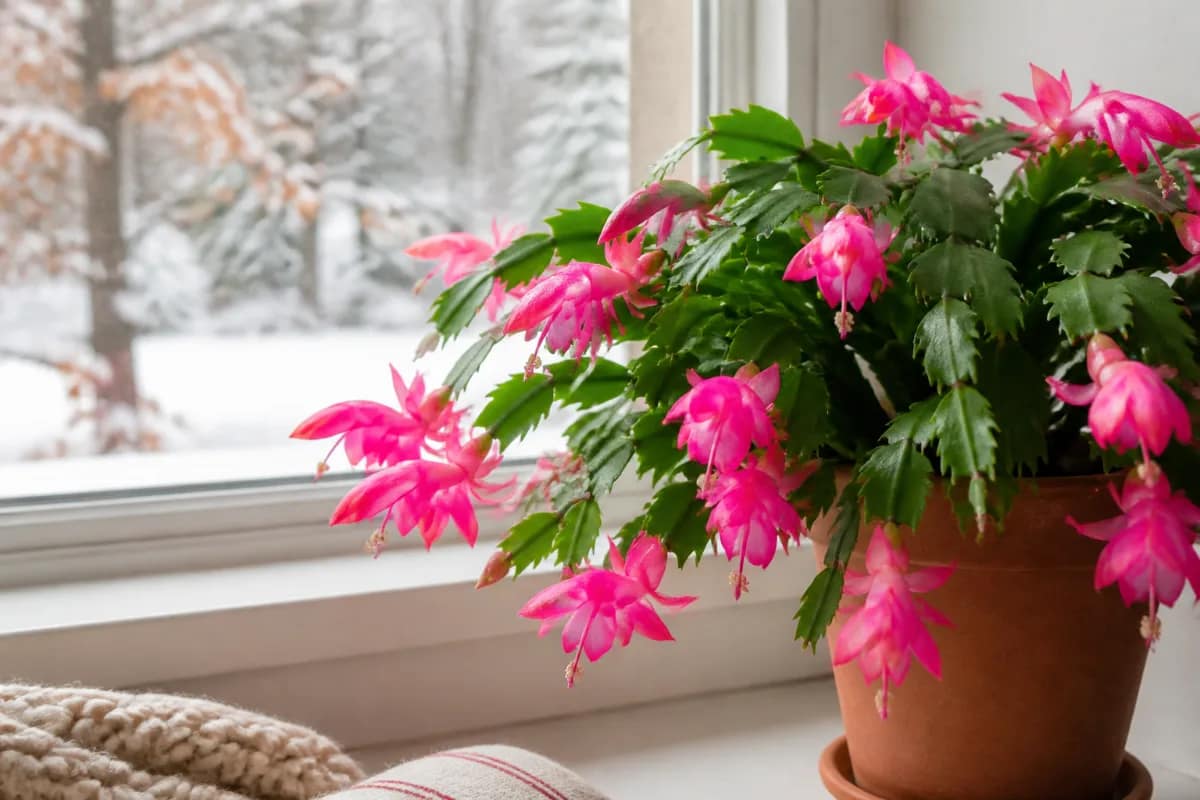
A Christmas cactus is one of those plants that gets passed down. Someone's grandmother had one, it bloomed every December for decades, and now a cutting of it sits on your windowsill. Then the holidays arrive and nothing happens: no buds, or a handful that drop before they open.
The good news is that Christmas cactus care isn't complicated once you know what this plant actually wants, and it's not what most people expect from a cactus. This guide covers everyday care, how to get a Christmas cactus to bloom again, why buds drop, and how to start new plants from cuttings. The advice comes from university extension horticulturists who field these questions every winter.
Before you change anything, take a close look at the stems. There are a few "holiday cacti," and many plants sold as Christmas cactus are actually Thanksgiving cactus. University of Illinois Extension notes that most "Christmas cactuses" sold are actually Thanksgiving cacti.
The flat green "leaves" are really stem segments, and their edges tell you which plant you have:
Thanksgiving and Christmas cacti need the same basic care, so everything below works for both. The only real difference is timing, since a Thanksgiving cactus tends to bloom a few weeks sooner.

Here's the key thing to understand: this isn't a desert cactus. In the wild, Christmas cacti grow on tree branches in the shady mountain forests of Brazil. That's why they like brighter shade, moderate temperatures, and a little more water than you'd give a typical cactus.
Give your plant bright, indirect light, such as a spot near a bright window with filtered light or a few feet back from a sunny one. University of Missouri Extension notes that holiday cacti tolerate low light but perform best in bright, indirect light, especially in winter. Strong summer sun is another story. Too much direct light can turn the segments pale or yellowish and even sunburn them.
There's no fixed schedule, because how fast the soil dries depends on your pot, your home, and the season. Instead, check the soil. University of Minnesota Extension suggests watering when the top inch of soil dries out. Water thoroughly, let the extra drain away, and empty the saucer so the pot never sits in water.
Missouri's extension horticulturist points out that, like most cacti, holiday cacti tolerate too little water better than too much. Soggy soil is the fastest way to rot the roots. While the plant is blooming, keep the soil evenly moist but never wet, because a plant that dries out too much can drop its flowers.
Christmas cacti like it moderate. University of Wisconsin–Madison Extension notes they're adapted to cool nights but not cold conditions, and they can't tolerate frost. Keep your plant away from heating vents, fireplaces, and cold, drafty doors, since sudden swings in temperature are a common reason for bud drop.
Use a light, well-draining mix. Heavy, wet soil causes trouble, so Missouri Extension suggests a commercial mix made for epiphytes, or a regular peat-based potting mix with extra perlite or sharp sand mixed in. Choose a pot with drainage holes.
Don't rush to repot. Holiday cacti bloom best when they're a little pot-bound, and extension experts suggest repotting only every three years or so, ideally in spring.
Feed only while the plant is actively growing, from spring through late summer. Use a houseplant fertilizer at a reduced strength. Missouri Extension suggests a regular fertilizer at one-quarter strength, or a houseplant fertilizer according to the label. Stop feeding in fall so the plant can focus on setting buds.
If your plant grows well but refuses to flower, it's almost always about light and temperature. Christmas cacti are "short-day" plants, which means they set flower buds when nights get long and cool. University of Minnesota Extension explains that Christmas and Thanksgiving cacti bloom after about 6 weeks of short days, as long as the nights are cool, too.
Starting in fall, around late September or October, give your plant this routine:
There's a shortcut if darkness is hard to arrange. University of Illinois Extension notes that nights around 55°F may trigger blooming regardless of night length. Don't go too cold, though, because temperatures below 50°F can cause flower buds to drop.

Once your plant is in flower, a slightly cooler room helps the show last longer. Illinois Extension suggests bright, indirect light with temperatures around 70°F during the day and 55 to 65°F at night while plants bloom. Penn State Extension adds that blooms last longer in cooler conditions and reminds readers that nighttime temperatures can be lower near windows, so check that your plant isn't pressed against cold glass on frosty nights.
Keep the soil lightly moist during bloom, and resist the urge to move the plant around for display. If you'd like it on the dining table for a holiday meal, bring it out for the day and return it to its usual spot afterward.
If you're shopping for a new plant or a gift, timing matters. University of Wisconsin–Madison Extension notes that plants in full bloom at Thanksgiving will usually be done blooming by Christmas. For flowers on Christmas Day, look in late November or early December for a plant with well-developed buds but no open flowers yet.
Look for firm, plump green segments with no soft or shriveled spots, and check that the pot drains. Once you get it home, give it a bright spot away from heating vents and drafts, and avoid repotting until spring. A new plant has already had a big change in light and temperature, and a few dropped buds in the first week or two can simply be the plant adjusting to your home.
Bud drop is the most common complaint, and it usually comes down to stress. Illinois Extension lists temperatures that are too high, drafts, too little light, overwatering or underwatering, and low humidity as typical causes. Clemson adds that a sudden change in temperature, light, or watering, or simply too many buds, can do it too.
Here's how to troubleshoot the usual problems:
Your Christmas cactus doesn't need much between holidays, but a little seasonal care keeps it blooming year after year:
If you have other outdoor plants on your summer schedule, the same check-the-soil-first habit from our garden maintenance checklist applies here, too.
Christmas cacti are easy to share, which is how so many become family heirlooms. A handy time to take cuttings is early summer, when you pinch the plant back: the pieces you remove can become new plants.
Yes, it's one of the friendlier holiday plants. The ASPCA lists the Christmas cactus as non-toxic to dogs, cats, and horses. That said, the ASPCA also notes that eating any plant material can cause mild stomach upset, so it's still smart to keep it out of reach of curious nibblers.
This matters more during the holidays, when lilies and other seasonal plants can be dangerous, especially to cats. For more ideas on a pet-friendly home, see our guide to creating a calm, comfortable space for your pet.
With good care, a very long time. Extension horticulturists describe holiday cacti that have outlived their original owners and been passed down for generations.
Only in mild weather. It can spend summer outdoors in light shade, but it should come inside before nights get cold, since it can't tolerate frost.
It's probably a Thanksgiving cactus. Check the stem edges: pointed, claw-like teeth mean Thanksgiving cactus.
It can help in winter, when indoor air is dry. University of Minnesota Extension suggests grouping holiday plants together and misting them occasionally to boost humidity. Low humidity is one of the stresses that can lead to bud drop.
Most Christmas cactus care happens quietly: bright, indirect light, water when the top inch is dry, and a pot that drains. The bloom comes from what you do in fall. Give your plant long, dark, cool nights, go easy on the water, and then leave it alone once buds appear. Do that, and your plant has a real shot at blooming on schedule this year and for many years after.


