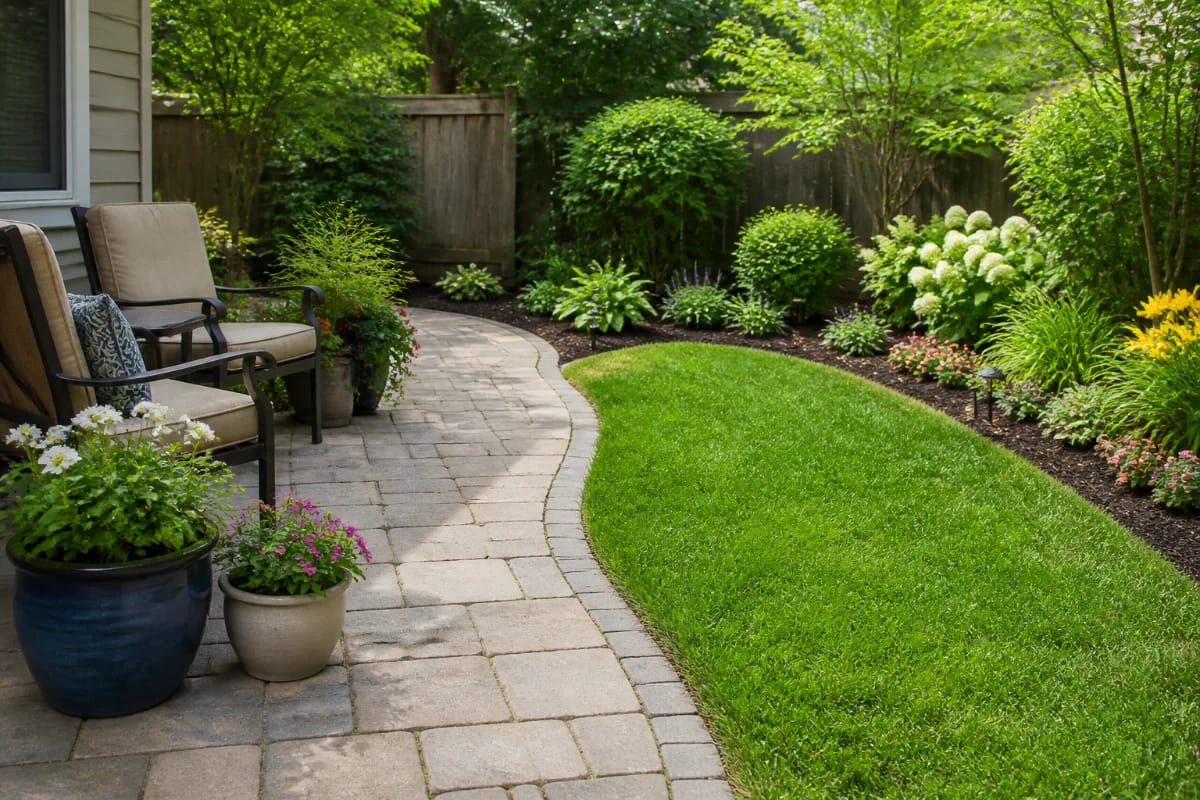
A neat yard isn't about perfect landscaping. It's mostly about the little things: leaves blowing into corners, weeds poking up between pavers, a hose left in a tangle by the back steps. Deal with those regularly, and your outdoor space looks cared for, even if your flower beds are nowhere near magazine-ready.
This guide covers practical yard cleanup you can do yourself, from clearing leaves and edging beds to sweeping the patio and finding a home for your tools. It sticks to paths, patios, edges, and clutter; for plant care such as watering and pruning, see our garden maintenance checklist. The goal is a tidy yard you can keep up with in short, regular sessions.
Your Yard Cleanup Checklist at a Glance
Think of this as a menu, not a strict schedule. Save the bigger jobs for spring and fall.
- Clear leaves and debris: a 15-minute pickup once a week, more often during leaf drop
- Stop weeds in paths and patios: pull what you see whenever you sweep
- Edge beds and trim overgrowth: every few weeks in the growing season
- Sweep and refresh hard surfaces: a weekly sweep, plus a deeper clean once or twice a year
- Group pots, furniture, and decor: after storms and at the start and end of each season
- Store tools, hoses, and supplies: after every use
Before You Start: Stay Safe During Yard Cleanup
Yard cleanup involves sharp tools, heavy bags, and loud equipment, so a few habits go a long way.
- Dress for the job. The U.S. Consumer Product Safety Commission's yardwork checklist recommends sturdy, slip-resistant shoes and long pants and sleeves, plus eye and hearing protection when needed. Keep safety glasses and work gloves where you can grab them.
- Lift smart. Fill bags only as full as you can carry comfortably.
- Watch for ticks. Ticks live in grassy, brushy, and wooded areas, and the CDC notes that many people get ticks in their own yard. Check yourself after working outside.
- Know poison ivy when you see it. If you're clearing brush, NIOSH advises long sleeves, long pants, boots, and gloves, washing exposed clothing separately, and never burning poison ivy or its relatives, because the smoke can irritate your lungs.
1. Clear Leaves and Yard Debris
Fallen leaves, broken twigs, and wind-blown trash make a yard look neglected fast. They also hide small problems, like a cracked step.
A Quick Weekly Pickup
Walk the yard with a bucket or yard waste bag and grab fallen branches, spent blooms, litter caught in shrubs, and leaves piling up along fences. Focus on areas near your house, patio, and play spaces. The CDC suggests removing leaf litter and clearing tall grass and brush around homes and at the edges of lawns to make your yard less friendly to ticks.
What to Do With Fall Leaves
You don't have to bag every leaf. Most yards use a mix of these four options:
- Mow them into the lawn. University of Minnesota Extension recommends mulching dry leaves with your mower, making two passes for finer pieces that break down quickly. Keep mulching while you can still see about half of the grass; once leaves cover more than that, rake up the extra.
- Use them as mulch. Shredded leaves make free mulch for flower beds. UConn Extension suggests spreading them around plants and leaving about 6 inches of open space around the base of each plant. It also recommends a dust mask when you mow dry leaves.
- Compost them. Leaves compost easily, but University of Minnesota Extension advises not composting diseased or insect-infested plants.
- Use curbside collection. Many towns collect yard waste in fall; check local rules for dates and approved bags.
You don't need a spotless yard. Clear leaves from the lawn, paths, and play areas, but it's fine to leave some in out-of-the-way beds. University of Illinois Extension points out that many pollinators and beneficial insects spend the winter in hollow stems and fallen leaves.
2. Stop Weeds in Paths, Patios, and Edges
Weeds between pavers, along the driveway, or at the base of the steps stand out far more than weeds in a bed, so tackle those first.
- Pull after rain. Weeds come out more easily, roots and all, when the soil is moist. University of Minnesota Extension says the best time to pull weeds is after a good rain or a thorough watering.
- Use a crack weeder. A narrow, hooked blade reaches into joints between pavers. The UC Statewide IPM Program notes that crack and crevice weeders work well, though scraping can disturb the joint sand and give new seeds a place to settle.
- Refill the gaps. Top off joint sand or gravel after weeding. On paver patios, polymeric sand can help reduce weeds, although UC IPM points out that it isn't a complete fix.
- Sweep often. Seeds that land on hard surfaces wash into cracks, so regular sweeping helps.
Household vinegar is hit or miss: UC IPM says results are variable and it works best only in very warm weather. For weeds inside your flower beds, see the weeding tips in our garden maintenance checklist.
3. Edge Beds and Tame Overgrowth
A crisp line between lawn and bed makes a yard look finished. It also slows grass from creeping in and keeps mulch off the lawn.
How to Edge Flower Beds
- Mark the line. Lay a garden hose along the edge for a smooth curve, then step back and check it.
- Cut straight down. Stand on the lawn side and push a flat spade or half-moon edger straight down, about 4 inches deep, along the line.
- Make the V. Move to the bed side, angle the spade back toward the first cut, and lift out the wedge of grass and soil.
- Finish the bed. Shake loose soil back into the bed, toss the grass in your compost, and top up the mulch so the trench stays visible.
Plan to touch up the edge a few times during the growing season, because grass will keep trying to cross it. If you decide to install deeper edging made of stone or steel, contact 811 before you dig so buried utility lines can be marked.
Trim Plants That Spill Over Paths
Trim back only the growth that leans into walkways, and save major pruning for the right season. Cutting back overhanging branches has another benefit: the CDC notes that ticks are less likely to be found in bright, sunny areas.
If Your Yard Is Overgrown
Don't try to fix an overgrown yard in one weekend. Break it into zones and start with the areas you use most, like the front walk.
- Walk the area first and look for hazards like broken glass, holes, and stumps.
- Cut tall growth in stages instead of forcing a mower through it in one pass.
- Check for poison ivy before you start pulling vines.
- Haul debris away as you go so piles don't turn into hiding spots for pests.
If you find large dead trees, heavy brush, or branches near power lines, that's the point to call a professional.
4. Sweep and Refresh Patios, Paths, and Steps
Clean hard surfaces are one of the quickest ways to make an outdoor space look cared for.
Sweep First, Then Spot-Clean
A stiff push broom does most of the work. Sweep weekly during busy seasons, paying attention to corners and the spots around planters and furniture. A leaf blower is faster on large areas; just wear hearing protection and blow debris onto your lawn or beds, not onto the sidewalk or into the street.
How to Clean a Patio by Surface
Most patios only need a scrub with water, a little mild detergent, and a stiff brush. A few surface-specific tips:
- Concrete and pavers: Scrub stains, then rinse well. If moss or algae make the surface slippery, Oregon State University Extension recommends sweeping and scrubbing it off, and it warns never to mix bleach with ammonia or other household cleaners.
- Wood and composite decks: Follow the manufacturer's cleaning instructions, since some cleaners and high pressure can damage these surfaces.
- Pressure washers: They're handy but powerful. The CDC warns never to point a pressure washer at yourself or others, and never to run a gas-powered unit in an enclosed space or within 20 feet of windows, doors, or vents because of the risk of carbon monoxide poisoning.
5. Group Pots, Furniture, and Decor
Containers, chairs, and decor add personality, but scattered around the yard, they look like clutter.
- Group pots in small clusters near steps or seating, keep walkways clear, and recycle cracked pots.
- Put plants with similar water needs together so watering is quicker.
- Empty standing water. The CDC recommends that once a week you empty and scrub, turn over, cover, or throw out items that hold water, such as flowerpot saucers, buckets, and birdbaths, to keep mosquitoes from breeding.
- At the end of the season, clean and dry cushions and store them, along with lightweight furniture, in a dry place.
Rakes leaning on the fence and bags of soil by the door make even a clean yard look messy. Give everything a spot.
- Hang long-handled tools on a wall rack in the shed or garage.
- Keep hand tools in one bucket or caddy you can carry around the yard.
- Coil hoses on a reel or hanger. Before the first hard freeze, Mississippi State University Extension recommends that you drain your garden hose, roll it up, and store it indoors.
- Keep fertilizers and weed killers in their original containers, in a locked cabinet out of reach of children and pets, as the EPA advises in its guide to reducing pesticide poisoning risks.
If you share your home with a dog or cat, our guide to creating a safe space for your pet has more ideas for keeping everyday hazards out of reach.
Spring and Fall Yard Cleanup: What to Add
Twice a year, set aside a little more time.
Spring Yard Cleanup
Many bees and other beneficial insects spend the winter in old stems and plant debris. University of Illinois Extension suggests waiting until low temperatures are reliably in the 50s before clearing beds, and leaving 8 to 24 inches of stalk when you cut perennials back. In the meantime, start with jobs that don't disturb the beds:
- Pick up branches, trash, and other debris left from winter.
- Check steps, paths, and fences for damage.
- Sweep and wash the patio and bring out the outdoor furniture.
- Re-cut bed edges once the soil is workable.
Fall Yard Cleanup
- Keep up with falling leaves so they don't mat down on the lawn.
- Bag diseased plant material instead of composting it.
- Clean, dry, and store cushions, covers, and decor.
- Drain and store hoses before a hard freeze.
Healthy perennials and seed heads can stay standing over winter to shelter insects.
Yard Cleanup FAQs
How often should I clean up my yard?
A 15-minute pickup once a week works for most yards, plus a bigger cleanup in spring and fall and extra time after storms.
When should I do spring yard cleanup?
Start on paths and debris as soon as the weather allows, but wait until low temperatures are reliably in the 50s before clearing flower beds.
Should I rake or mulch my leaves?
If the leaf layer is moderate, mulching with your mower is easier and returns organic matter to the soil. Rake up the extra when leaves cover more than about half of your lawn.
Can I burn leaves and yard waste?
It's best not to. The EPA notes that burning leaves releases particle pollution that can cause breathing problems, especially for young children, older adults, and people with asthma. Many communities also ban or restrict open burning, so composting or curbside collection is the safer choice.
How do I keep my yard tidy with a dog?
Pick up dog waste often, daily if you can, bag it, and put it in the trash. Penn State Extension says dog waste should never go into compost piles or be used to amend soil. It's also smart to check your dog for ticks after time outdoors.
A Simple 30-Minute Weekend Reset
Short on time? Set a timer for 30 minutes and work through this list:
- Pick up debris and trash (10 minutes).
- Sweep the patio, steps, and front walk (10 minutes).
- Pull weeds from paths and tidy your pots (5 minutes).
- Put away tools and coil the hose (5 minutes).
Do that most weekends, and the big jobs stay small. Your yard doesn't have to be perfect, just cared for.