Menu
close


Learn how to help a dog with separation anxiety: spot the signs, rule out health issues, and build alone time step by step with a calm, vet-informed plan.
EyesMata is reader-supported. Some links on our site may be affiliate links, which means we may earn a small commission at no extra cost to you. Learn more.
You grab your keys, and your dog starts pacing. You come home to a chewed door frame, a puddle by the entrance, or a neighbor mentioning the howling. If that sounds familiar, you're not alone, and your dog isn't being spiteful. Dogs with separation anxiety are genuinely distressed when they're left by themselves.
The good news is that separation anxiety usually improves with a patient, step-by-step plan. This guide shows you how to help a dog with separation anxiety: how to tell whether that's really what's going on, what you can safely try at home, how to build up time alone without overwhelming your dog, and when it's time to bring in a professional.
This article is general information, not veterinary advice. Every dog is different, so talk with your veterinarian about your dog's specific situation.
Separation anxiety is more than a dog who'd prefer you stayed home. It's a stress response that kicks in when a dog is separated from the person, or people, they're attached to. A 2014 review in Veterinary Medicine: Research and Reports notes that separation-related problems have been estimated to affect around 20 percent of dogs, though the author also points out that diagnosis often relies on indirect clues.
According to the ASPCA's guide to treating separation anxiety, common signs include:

Before you start training, rule out other causes. A behavior that looks like anxiety can have a medical explanation, and some issues simply look similar.
If your dog seems relaxed in the video, napping or wandering around calmly, you're probably dealing with boredom or a training gap rather than true separation anxiety. Our daily pet care checks can help you spot changes in energy, appetite, or habits worth mentioning to your vet.
The right approach depends on how intense your dog's reaction is. A dog who whines for a few minutes and then settles is in a very different place from a dog who claws at the door until their paws are sore.
Mild cases often improve with simple changes that make being alone feel less stressful and a little more rewarding.
Moderate to severe cases need a gradual training program, usually with professional guidance. The ASPCA notes that these cases can be tricky, because if a dog is pushed past what they can handle, the fear can get worse instead of better.
These steps are safe for most dogs and form the foundation of any plan.
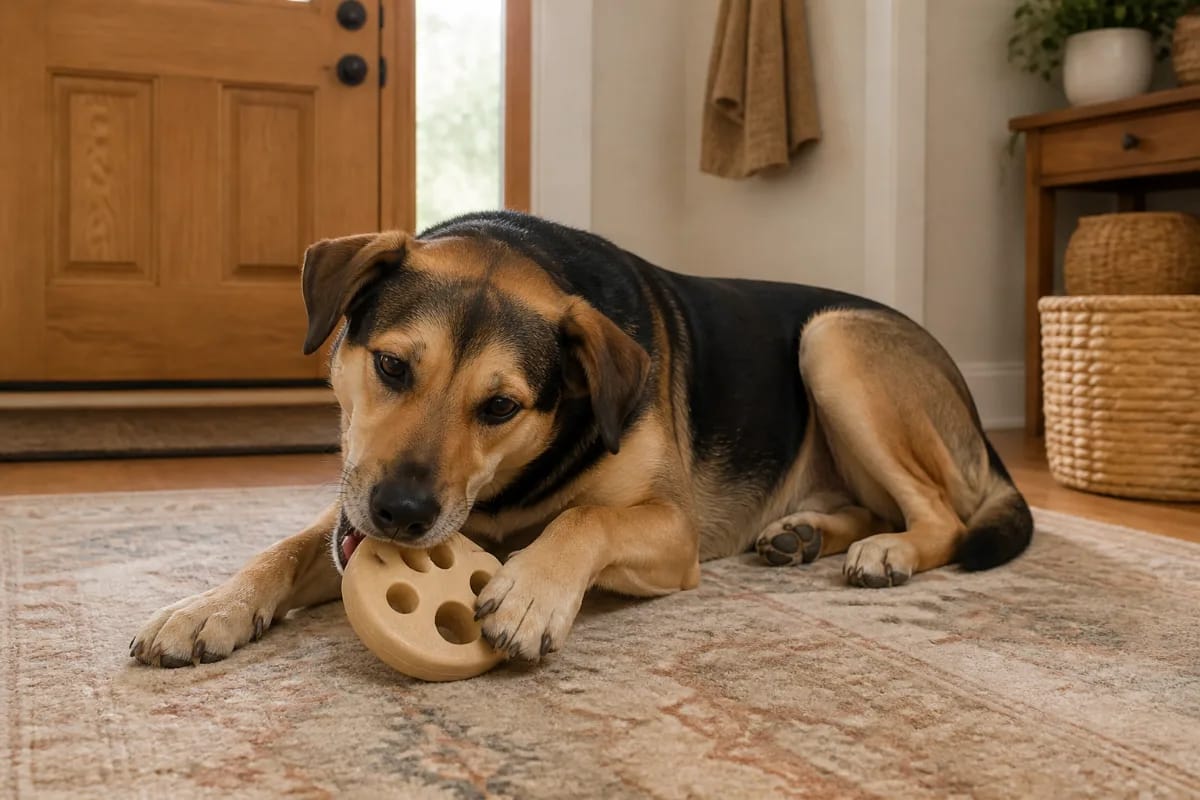
For mild cases, the ASPCA suggests giving your dog a food puzzle toy, such as a hollow rubber toy stuffed with something tasty, every time you leave. Aim for something that takes at least 20 to 30 minutes to finish. Pick it up as soon as you get home so it only shows up when your dog is alone. One honest caveat: this works best for mild cases, because a very anxious dog may be too upset to eat.
Big, emotional goodbyes and excited reunions can make your comings and goings feel like a bigger deal. Leave calmly, and when you return, greet your dog briefly and wait until they're relaxed before giving more attention.
A tired dog tends to settle more easily. The ASPCA recommends at least 30 minutes of aerobic activity a day, ideally right before you leave. Add in brain games too, like hiding pieces of kibble around a room for your dog to hunt. On icy winter days, our guide to keeping your dog warm has tips for getting outside safely.
A comfortable, familiar space can help some dogs relax. Crates help some dogs and stress others, so watch closely. If your dog pants heavily, drools, tries frantically to escape, or howls in the crate, stop using it and try a room behind a baby gate instead. Our guide to creating a calm, safe space for your pet walks through how to set one up.
It's frustrating to come home to damage, but scolding won't help. Your dog isn't misbehaving on purpose; they're reacting to distress. Punishment can make the anxiety worse and make your returns something to fear.
For moderate to severe separation anxiety, the goal is to build tolerance for being alone in tiny steps, so your dog never reaches full-blown panic. Trainers call this desensitization and counterconditioning. Here's how it typically works, based on the ASPCA's guidance.
Throughout training, watch for stress signals such as dilated pupils, panting, yawning, drooling, trembling, pacing, or a very excited greeting when you return. If you see them, go back to a shorter absence that your dog handled comfortably.

Expect weeks, not days. The ASPCA describes several short sessions a day on weekends and a couple of sessions on workdays. Every dog moves at their own pace, and there's no standard timeline. Slow, steady progress is a good sign.
Here's the tricky part: while you're training, your dog shouldn't be left alone for longer than they can handle. Each panic episode can undo some of your progress. That sounds impossible for working households, but there are options:
It's a temporary arrangement, and it gives your training the best chance of sticking.
Home training can work well for mild cases, but some dogs need more support. Reach out to your veterinarian or a qualified behavior professional if:
For a formal training plan, the ASPCA recommends a Certified Applied Animal Behaviorist (CAAB) or a board-certified veterinary behaviorist. If neither is available, look for a certified trainer who specifically has experience treating fear with desensitization and counterconditioning.
For dogs with severe anxiety, your veterinarian may also talk with you about prescription treatment to use alongside training. That decision belongs with your vet, who knows your dog's health history. Never give your dog any medication or supplement for anxiety without your veterinarian's guidance.
If you have a new dog or puppy, a few habits can make time alone feel normal from the start. The 2014 review lists protective factors such as a wide range of experiences outside the home and with other people between about 5 and 10 months of age, stable household routines, regular short absences, and avoiding punishment.
In practice, that means practicing short separations early, even when you're home all day, building a predictable daily routine, and making alone time pleasant with a chew or food toy. If your schedule is about to change, like a return to the office, start practicing a few weeks ahead.
Many dogs improve a lot with consistent training, and some get to the point where they're comfortable alone for a full workday. Severe cases may need ongoing management. Progress depends on the dog, the severity, and how gradually training happens.
Not reliably. Many dogs with separation anxiety are attached to their person, not just to company in general, so another dog may not ease their distress. It's best to work on your dog's anxiety first before adding another pet.
Some dogs may find background sound comforting, especially if it's something they hear when you're home. It's not a treatment on its own, though, so pair it with the training steps above.
It depends on the dog. Some feel secure in a crate, while others panic and can hurt themselves trying to escape. Watch your dog's reaction closely, and use a gated room instead if the crate seems to make things worse.
Helping a dog with separation anxiety takes patience, but it's very doable. Start with a vet visit to rule out medical causes, make your departures calm and rewarding, and build your dog's comfort with being alone one small step at a time. If your dog's distress is intense or isn't improving, a veterinary behaviorist or qualified trainer can help you build a plan that fits your dog.


