Menu
close


Learn how to overwinter geraniums three easy ways: as houseplants, stored dormant, or from cuttings. Includes timing, winter care, and spring tips.
EyesMata is reader-supported. Some links on our site may be affiliate links, which means we may earn a small commission at no extra cost to you. Learn more.
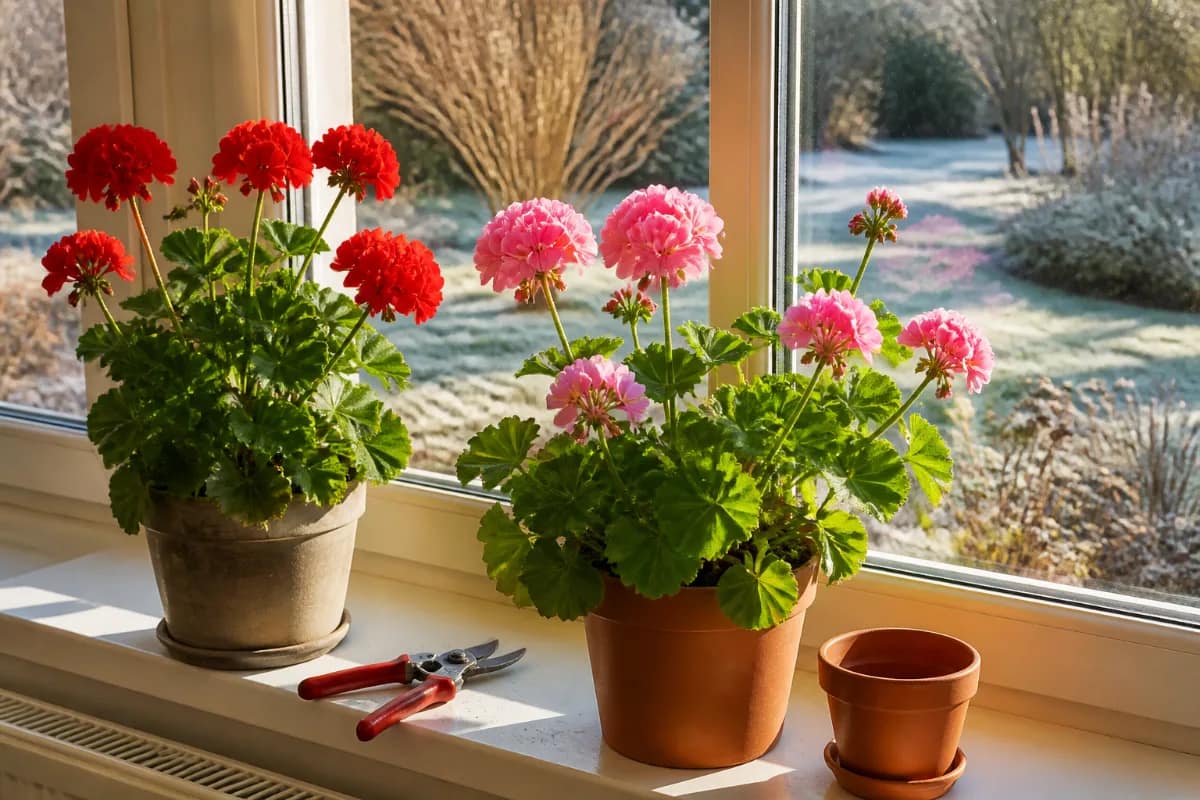
If your geraniums looked great all summer, it feels like a waste to let the first hard freeze finish them off. The good news is that you don't have to. Learning how to overwinter geraniums is easier than most people expect, and a plant you save this fall is often bigger and fuller next spring than anything you'd buy in a six-pack at the garden center.
This guide walks you through three simple ways to keep geraniums alive over winter: growing them as houseplants, storing them dormant, or taking cuttings. You'll also learn when to bring them in, how to care for them indoors, and how to wake them up in spring.
The plants most people call geraniums, the ones in window boxes and patio pots with big clusters of red, pink, or white flowers, are actually Pelargonium. They come from South Africa, and they can't survive freezing temperatures. These are the ones this guide is about.
True geraniums, often called hardy geraniums or cranesbills, are a different group of perennials. They die back in fall and return on their own in spring, so you can leave them in the garden. If your plant came back by itself last year, it's probably a hardy geranium and doesn't need to come inside.
Timing matters more than any other step. Both Iowa State University Extension and the University of Wisconsin–Madison Extension recommend moving geraniums or taking cuttings before frost arrives. Once nights start dipping into the 40s, it's a good time to act.
If you've already had a light frost, don't give up. Trim off any blackened leaves and stems, and work with the healthy, firm growth that's left. If a hard freeze has turned the whole plant soft and dark, it's unlikely to recover, but any firm green stems can still be tried as cuttings.
Before you start, choose your best plants. Pick geraniums that are healthy, vigorous, and free of insects or disease. A struggling plant rarely improves indoors, and pests can spread to your other houseplants.
You don't need special equipment. Most of these supplies are already in a garage or garden shed.
Each method works. The right one depends on how much space and light you have.
Many gardeners combine methods. For example, you might keep one favorite potted plant growing in the window and take cuttings from the rest as a backup. If you're new to overwintering, starting with one or two plants is a low-pressure way to see which method suits your home.
This is the simplest option and the one that usually gives the best plants in spring. You're basically moving your geranium indoors and keeping it alive until the weather warms up.
Indoor geraniums often get tall and stretched by late winter. That's normal. Pinch stems just above a leaf node to keep them bushier, and plan on a bigger trim in early spring.

This old-fashioned method lets geraniums rest through winter with almost no space or light. It takes less daily care, but it's less predictable than the other two methods, so it's smart to take a few cuttings as insurance.
In March, take the plants out and look for firm, green stems. Cut each plant back to that healthy tissue, removing anything shriveled or dead. Pot them up, water thoroughly, and set them in a sunny window or under a grow light. New growth may be slow at first, so give them time.
Geraniums root easily from cuttings, and this is a great way to save a favorite color without making room for a large plant. Cuttings also tend to make compact, tidy plants by spring.

Once your geraniums are settled, winter care is mostly about patience. A few common issues are easy to fix if you know what to look for.
If you share your home with pets, keep geraniums out of reach. The ASPCA lists geraniums as toxic to cats and dogs, with signs such as vomiting, loss of appetite, and skin irritation. A high shelf or a room your pets don't use is a safer spot. If you're bringing in other plants for the season, our Christmas cactus care guide covers another easy winter bloomer.
Late winter is when your overwintered geraniums start getting ready for the garden again.
When spring arrives, it's also a good time to plan the rest of your outdoor work. Our garden maintenance checklist can help you get beds and containers ready.
Common geraniums (Pelargonium) can't survive frost, so they need to come inside in most of the U.S. In frost-free areas, they can stay outdoors year-round. Hardy geraniums are different and can stay in the ground.
Yes, but much less than in summer. Potted geraniums growing indoors only need water when the soil feels dry. Dormant bare-root plants don't need regular watering, though an occasional root soak helps keep them from drying out completely.
For plants you'll grow as houseplants, trimming by about one-third to one-half makes them easier to manage and encourages fresh growth. For dormant storage, you'll do most of the pruning in March instead.
Some leaf drop is normal after a move indoors. Geraniums are adjusting to lower light, drier air, and a new temperature, so a few yellow or fallen leaves in the first couple of weeks aren't a concern. If leaf drop continues, check for overwatering, cold drafts, or not enough light. Dormant bare-root plants are different: they're expected to lose all their leaves.
You can store dormant geraniums in a garage only if it stays cool but above freezing all winter, ideally around 45 to 55°F. An unheated garage in a cold climate often gets too cold, so a basement or unheated room is usually safer.
Yes. Once they're back outside with longer days and warmer weather, healthy overwintered geraniums usually start flowering again in late spring or early summer. Plants kept growing indoors tend to bloom first, while dormant plants and young cuttings may take a little longer to catch up.
Saving your geraniums over winter takes a little effort in fall and pays off with bigger, earlier plants next spring. Bring them in before a hard freeze, choose the method that fits your space, and keep them cool, bright, and on the dry side. If you're also tidying up outdoors before winter, our yard cleanup tips can help you finish the season strong.


