Menu
close


A practical new puppy checklist: the supplies you actually need, how to puppy-proof your home, first vet visit and microchip tasks, and what the first week looks like.
EyesMata is reader-supported. Some links on our site may be affiliate links, which means we may earn a small commission at no extra cost to you. Learn more.
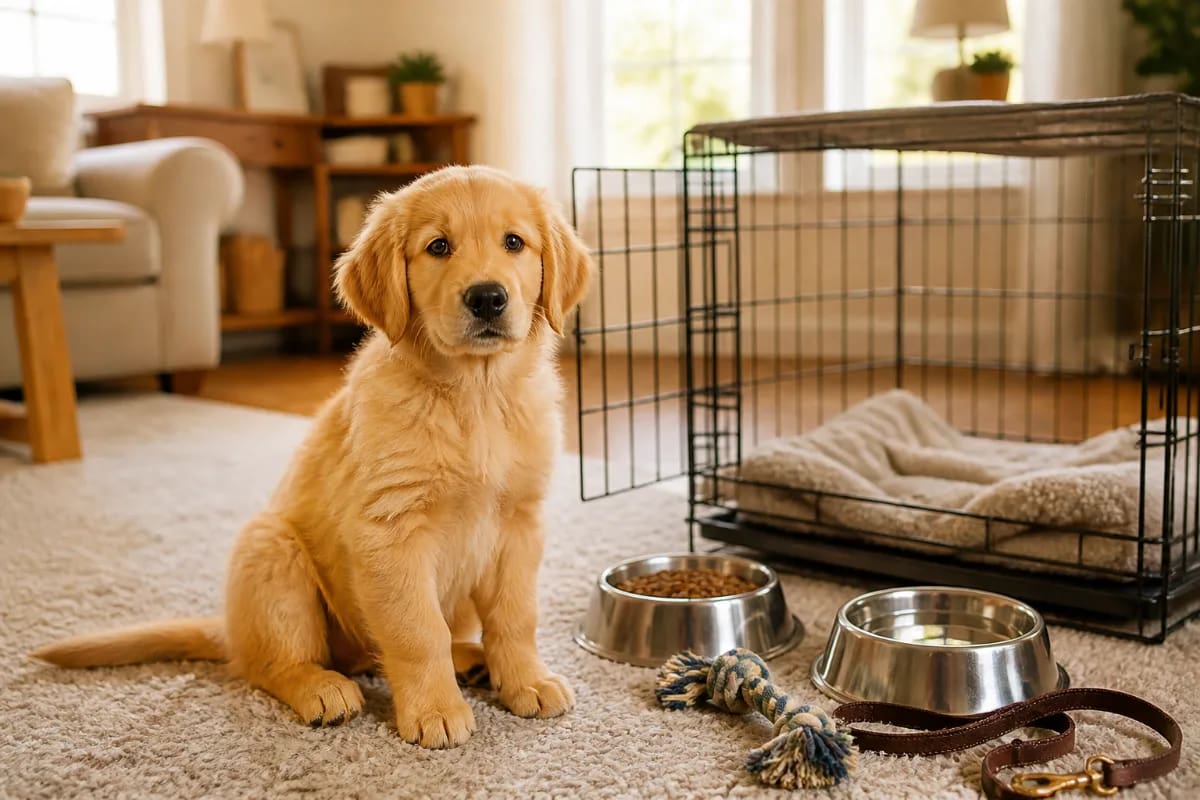
The day you bring a puppy home is exciting, and a little chaotic. There's a tiny, curious animal exploring every corner, chewing whatever it finds, and needing to go potty about five minutes after you thought it just went. A bit of preparation makes that first week calmer for everyone, including the puppy.
This new puppy checklist covers what to buy, how to puppy-proof your home, which health tasks to take care of early, and what the first few days usually look like. It's written for first-time owners, but it works as a quick refresher if it's been a while since your last puppy.
This article is general information, not veterinary advice. Every puppy is different, so talk with your veterinarian about your puppy's health, vaccines, and diet.
It's tempting to start with a shopping cart, but a few decisions will shape what you actually need. Talk these through with everyone in your home:
You don't need everything in the pet store aisle. Here's a practical list of puppy supplies, grouped by what they're for. Skip the fancy extras for now. You'll learn what your puppy really likes once you get to know them.

Rotate toys every few days to keep them interesting, and supervise new toys until you know how your puppy plays with them.
Start handling paws, ears, and mouth gently from the first week. A few seconds at a time, paired with a treat, helps your puppy accept grooming and vet exams later.
The easiest way to puppy-proof is to get down on the floor and look around from your puppy's height. Anything that dangles, rolls, or smells interesting is fair game to a curious puppy. Pay special attention to:
Food is a big one too. The ASPCA's list of people foods to avoid includes chocolate, grapes and raisins, onions and garlic, macadamia nuts, and xylitol, a sweetener found in some gum, candy, baked goods, and peanut butter. If you think your puppy ate something harmful, call your veterinarian or the ASPCA Animal Poison Control Center at (888) 426-4435.
Then set up a quiet corner where your puppy can rest without being bothered. Our guide to creating a calm, comfortable space for your pet walks through how to do it.
Plan to see your veterinarian within the first week, even if your puppy seems perfectly healthy. Bring any records you got from the breeder or shelter. Your vet will check your puppy over, talk about deworming and parasite prevention, and set up a vaccine schedule.
Puppies need a series of vaccines, not just one. The 2022 AAHA Canine Vaccination Guidelines list core vaccines for all dogs, including distemper, adenovirus, parvovirus, leptospirosis, and rabies. The puppy series usually runs every few weeks until around 16 weeks of age, but your vet will tailor the timing to your puppy.
A collar can slip off. A microchip can't. In a study of more than 7,700 stray animals cited by the American Veterinary Medical Association, microchipped dogs made it back to their owners 52.2% of the time, compared with 21.9% of dogs without chips. The most common reason chipped pets didn't get home was missing or wrong owner information.
If your puppy is already chipped, register it in your name right away and save the chip number somewhere you can find it.
Puppies thrive on routine. A predictable day helps with potty training, sleep, and settling in.

Potty breaks: Take your puppy out first thing in the morning, after meals, after naps, after play, and before bed. According to the American Kennel Club, an 8-week-old puppy probably can't hold it longer than about 2 hours, and a 12-week-old puppy about 3 hours.
Sleep: Don't worry if your puppy naps a lot. The AKC notes that puppies usually sleep 18 to 20 hours a day. An overtired puppy often gets bitey and wild, so guide them to their crate or bed for a nap.
Meals: Feed at the same times each day, following your vet's advice and the food label.
Training: Keep sessions to a few minutes. Start with their name, "sit," and coming when called, using treats and praise.
The first few months are a big window for learning about the world. The American Veterinary Society of Animal Behavior says the first three months are the most important time for puppy socialization. It also says puppies can start puppy classes as early as 7 to 8 weeks, as long as they've had at least one set of vaccines a week before the first class, plus a first deworming.
Safe socialization might look like meeting calm, vaccinated adult dogs you know, short car rides, hearing everyday sounds like the vacuum, and meeting people of different ages. Until your vet says your puppy is fully protected, skip dog parks and other places where lots of unknown dogs go. Watch your puppy's body language, and go slower if they seem scared.
Kids and puppies can be wonderful together, but young children don't always know when a puppy has had enough. A few ground rules help:
Give older kids simple jobs, like filling the water bowl or helping with a training session, so they feel part of the team.
The essentials are puppy food, food and water bowls, a crate, a washable bed, a collar with an ID tag, a leash, chew toys, grooming tools, poop bags, and an enzyme cleaner. Baby gates or a playpen help a lot too.
Within the first week is a good goal, even if your puppy seems healthy. Bring any records you received so your vet can plan the rest of the vaccine series.
Many owners find a crate helpful for sleep and potty training, as long as it's the right size and your puppy learns to see it as a cozy den. Young puppies will still need nighttime potty breaks.
Usually yes, to your own yard (if unknown dogs don't visit it) and for careful socialization. Avoid dog parks and areas with lots of unknown dogs until your vet says your puppy is protected.
A new puppy doesn't need a mountain of gear. They need a safe space, the right food, a few good toys, a vet who knows them, and a family that's patient and consistent. Get the basics ready, puppy-proof at floor level, and build a simple routine. Once things settle in, our list of simple daily pet care checks can help you keep your puppy healthy as they grow. And if your puppy arrives during the colder months, these tips on keeping your dog warm in winter are worth a look.


