Menu
close


Learn how to prevent frozen pipes with a simple winter checklist: insulate, seal drafts, drip faucets, and thaw a frozen pipe safely. Know when to call a pro.
EyesMata is reader-supported. Some links on our site may be affiliate links, which means we may earn a small commission at no extra cost to you. Learn more.
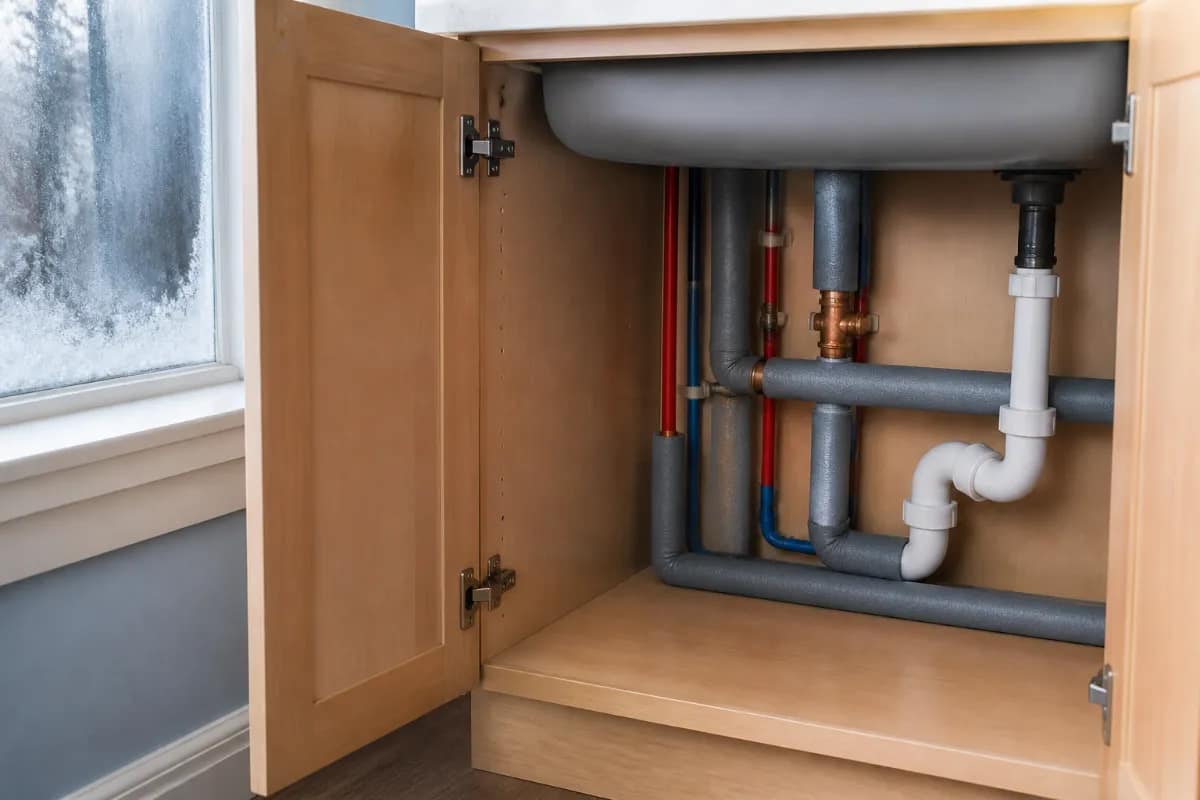
There's a special kind of dread in turning on the kitchen tap on a frigid morning and getting nothing but a sputter. A frozen pipe is inconvenient. A frozen pipe that splits is a different story, because once it thaws, water can pour into walls, floors, and cabinets before you even know it's leaking.
The good news: most frozen pipes are preventable with a few inexpensive habits and an hour of prep before the first hard freeze. This winter checklist walks you through how to prevent frozen pipes, what to do during a cold snap, and how to thaw a frozen pipe safely if one slips through anyway. It focuses on simple steps for homeowners and renters, and it's clear about when it's time to call a licensed plumber instead.
Water expands when it freezes. That's the whole problem in one sentence. Oklahoma State University Extension points out that this expansion puts a lot of pressure on water pipes, whether they're metal or plastic.
Often the split doesn't happen right where the ice forms. Pressure builds in the water trapped between the ice and a closed faucet, and the pipe gives way at its weakest point. That's also why many leaks show up only after the pipe thaws. And they add up fast: University of Illinois Extension notes that an eighth-of-an-inch crack can release up to 250 gallons of water a day.
Water freezes at 32°F, but your pipes usually have some protection from walls, insulation, and the warmth of your home. Research from the Building Research Council at the University of Illinois found that uninsulated pipes in an unheated attic started to freeze when the outdoor temperature fell to about 20°F. That's why 20°F is often called the "temperature alert threshold."
Treat that number as a warning sign, not a guarantee. Pipes exposed to drafts or wind can freeze at warmer temperatures, and homes in warmer regions are often more at risk because their plumbing isn't built for hard freezes. If the forecast calls for the teens or lower, it's time to act.
Not every pipe in your home is in danger. The ones to worry about are cold, exposed, or both. According to University of Missouri Extension, the pipes that freeze most often are outdoor hose bibs and pipes in unheated areas such as crawl spaces, attics, garages, and kitchen cabinets, along with pipes that run against exterior walls.
Take a flashlight and walk your home before winter. Look in the garage, the crawl space, and under kitchen and bathroom sinks. If a pipe sits near an outside wall or in a space you don't heat, add it to your list.

This is the most important step on the list, and it takes five minutes. Your main shutoff valve is usually where the water line enters the house, often in the basement, a utility room, or near the water heater. Utah State University Extension recommends teaching adults and older children where the main shutoff is and how to turn it off, because quick action can greatly reduce water damage. If the valve is stiff or stuck, ask a plumber to look at it now rather than during an emergency.
A hose left attached can trap water in the faucet, and ice can work its way back toward the pipe inside your wall. The American Red Cross recommends that you remove, drain, and store outdoor hoses, close the inside valves that supply outdoor hose bibs, and open the outside faucets so they can drain. Leave the outside faucet open for the winter so any leftover water has room to expand. (Draining the hose is part of a good fall yard cleanup, too.)
Some homes have "frost-proof" outdoor faucets. They help, but University of Illinois Extension warns that they can still freeze, depending on how cold it gets and how well your walls are insulated.
Foam pipe sleeves are cheap, easy to cut with scissors, and sold at any hardware store. Insulate both hot and cold lines in unheated spaces. Make sure the sleeves fit snugly, cover joints and fittings, and are taped closed so there are no gaps.
One caveat: insulation slows heat loss, but it doesn't add heat. Utah State University Extension notes that insulation won't protect pipes from prolonged freezing temperatures unless there's some source of heat or periodic water flow. Think of insulation as one layer of protection, not the whole plan.
Cold air sneaking through gaps can freeze a pipe well above 20°F. Look for openings where pipes, cables, or vents pass through exterior walls and around the rim of your basement or crawl space. Caulk or expanding foam seals small gaps. Oklahoma State's guidance also suggests checking where the water line enters your home and sealing leaks there. Keep garage doors closed in cold weather if water lines run through the garage.
For a pipe that has frozen before, or one that's hard to insulate well, electric heat cable (often called heat tape) can help. The Red Cross recommends choosing a UL-listed product. Follow the manufacturer's instructions exactly, and replace any cable that looks cracked or worn.
Heat cable has one big weakness: it only works with power. Utah State's extension service says heat cable shouldn't be your first choice for that reason, because pipes can freeze during a long outage.
Drain swimming pool and sprinkler supply lines following the manufacturer's or installer's directions. The Red Cross specifically warns against putting antifreeze in these lines unless directed, because it can harm people, pets, wildlife, and landscaping. If you're not sure how your system drains, this is a reasonable job to hand off to an irrigation pro.
When a hard freeze is in the forecast, a few simple moves make a big difference:
Dripping does use water, so Utah State's extension recommends it mainly when more permanent fixes aren't possible. During a short, severe cold snap, though, it's cheap insurance.
Travel is when pipes most often freeze unnoticed. Before you go, set your thermostat no lower than 55°F, as the Red Cross advises, and make sure your heating system is working. The National Weather Service adds two more options: have someone check your house daily to make sure the heat is still on, or drain and shut off the water system (except indoor fire sprinkler systems). If you're leaving a home empty for a long stretch, a plumber can show you how to drain the system properly.
If you turn on a faucet and only a trickle comes out, suspect a frozen pipe. Frost on a pipe, a bulge, or no water at one fixture while others work are other clues. Start by checking pipes along exterior walls and where your water service enters the house.
Only try this if you can see and reach the frozen section and the pipe isn't cracked or leaking. Here's the approach recommended by the Red Cross and university extension services:
Some things you should never do. Never use a blowtorch, propane or kerosene heater, charcoal stove, or any open flame. University of Missouri Extension warns that a blowtorch can make water in a frozen pipe boil and the pipe explode, and that open flames indoors create a serious fire danger and a risk of deadly carbon monoxide. Utah State's extension also advises against using boiling water. Keep electrical devices away from standing water, and don't leave a hair dryer or heater running unattended.

Call a pro if you can't find the frozen section, the pipe is inside a wall or ceiling, your main water line or meter appears frozen, or you can't thaw the pipe. The same goes for any sign of a crack, bulge, or leak. A plumber has safer tools for frozen lines and can check for hidden damage.
Act fast. Shut off the main water valve right away, then open a few faucets to drain the remaining water. If water is near outlets, cords, or your electrical panel, stay out of it and call a licensed electrician or your utility. Call a plumber, take photos of the damage, and contact your insurance company. Move valuables out of the wet area and start drying things out as soon as it's safe.
Once the immediate crisis is over, a monthly home maintenance check can help you spot slow leaks and drafts early, before the next cold snap.
The Red Cross recommends letting cold water drip from faucets served by exposed pipes. University of Illinois Extension suggests a trickle of both hot and cold on a faucet on an outside wall, since hot water lines can freeze too.
Yes, once temperatures rise, but waiting can be risky. A pipe that has been frozen for hours may have cracked and start leaking as it thaws. Know where your shutoff is and keep an eye on it.
Yes, if you're careful. Keep it moving, stay out of standing water, and never leave it running unattended.
Yes. Plastic pipes can freeze and break just like metal ones, so give them the same insulation and attention.
It depends on your policy and the circumstances. Call your insurance agent before winter so you know what's covered and what steps your insurer expects you to take.
When the forecast drops into the teens, spend ten minutes on this: check that outdoor faucets are drained, open the sink cabinets on outside walls, set the thermostat to stay steady overnight, and start a slow drip on your most exposed faucet. Your pipes and your morning coffee will thank you.


