Menu
close


Start an indoor herb garden with the best herbs to grow inside, plus simple light, watering and harvesting tips and small-space ideas that work.
EyesMata is reader-supported. Some links on our site may be affiliate links, which means we may earn a small commission at no extra cost to you. Learn more.
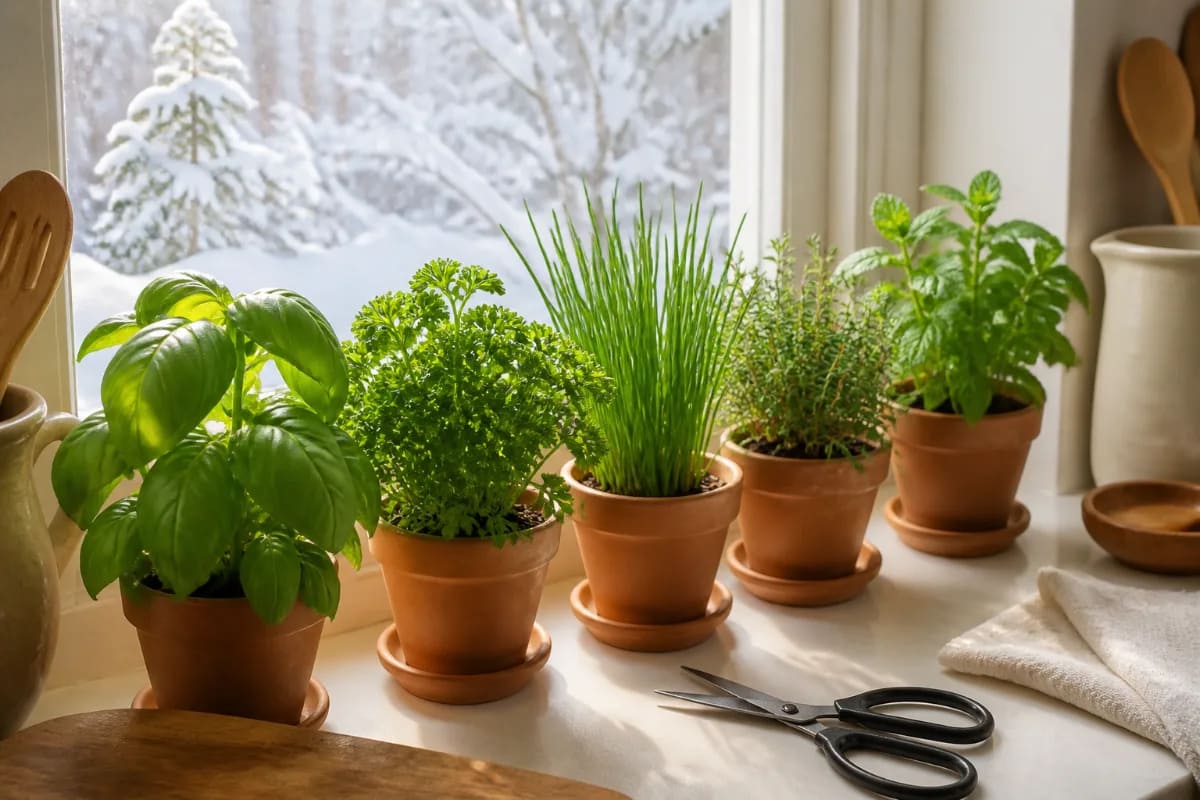
There's something satisfying about snipping fresh basil for dinner in the middle of January. An indoor herb garden gives you that, plus a little green in the kitchen when everything outside looks gray. You don't need a greenhouse or a big budget to start. A sunny window, a few good pots, and the right plants will get you most of the way there.
The trick is choosing herbs for an indoor herb garden that actually like living inside. Some handle a windowsill with ease, while others sulk without hours of strong light. This guide covers the best herbs to grow indoors, what they need to stay healthy, and simple ideas for setting up a small indoor herb garden that fits your space.
Before picking plants, it helps to know what herbs are up against indoors. Most culinary herbs evolved in bright, open spaces, so a typical living room in winter can feel pretty dim to them. Getting a few basics right makes a bigger difference than any special product.
Light is where most indoor herb gardens succeed or fail. Iowa State University Extension notes that herbs generally need about eight hours of direct light, though some will manage with six. A south-facing window usually gets the most sun, and east- or west-facing windows can work too. North-facing windows are typically too shady for sun-loving herbs.
If your windows don't get that much sun, especially in winter, a grow light is worth it. Iowa State suggests a full-spectrum light placed about 6 to 12 inches above the leaves and running 12 to 16 hours a day. A simple outlet timer makes this easy to keep consistent. Whatever light you use, turn your pots every few days so the plants don't lean in one direction.
Herbs like the same temperatures most people do. According to University of Illinois Extension, most plants grow best when daytime temperatures are between 65 and 70°F, with nights around 55 to 60°F. Keep pots away from heat registers and radiators, which can dry them out quickly. In winter, also watch for cold drafts from leaky windows, and don't let leaves press against freezing glass.
Good drainage matters more than the pot's style. Choose containers with drainage holes and use a light, well-draining potting mix rather than garden soil. Terracotta pots are a nice choice because the clay breathes and helps the soil dry out between waterings. Iowa State also recommends giving each herb its own pot, since different herbs have different water needs and some, like mint, tend to take over.
These herbs are the most forgiving choices for beginners. Iowa State lists parsley, mint, chives, basil, oregano, cilantro, and thyme among the herbs that grow best indoors. Start with two or three you actually cook with, and add more once you get the hang of it.

Basil is the herb most people want first, and it's a good one to learn on. It loves warmth and bright light, so give it your sunniest spot and keep it away from cold windows at night. Pinch off the top sets of leaves often to keep it bushy, and remove flower buds as they appear so the plant keeps putting energy into leaves.
Parsley is steady and reliable indoors. Both curly and flat-leaf types work well. It grows a little more slowly than basil, but it tolerates slightly less light. Harvest the outer stems first and let the center keep producing new growth.
Chives are one of the easiest herbs to grow inside. Their mild onion flavor works in eggs, potatoes, and soups. Snip the leaves an inch or two above the soil, and the clump will keep sending up new ones.
Mint is famously vigorous, which makes it rewarding indoors. Give it its own pot, because it spreads quickly and can crowd out neighbors. It handles a bit less light than many herbs, and it appreciates soil that doesn't dry out completely.
Oregano is a compact, flavorful option for pizza and pasta lovers. It prefers bright light and soil on the drier side, so don't overwater it. Trim it regularly to keep the stems from getting long and woody.
Thyme has small leaves and a low, spreading habit that suits a sunny windowsill. Like oregano, it likes good drainage and doesn't want soggy soil. It's a great choice for a small indoor herb garden because it doesn't take up much room.
Cilantro grows fast but tends to flower and fade sooner than other herbs, especially when it's warm. Many growers sow a few seeds every few weeks so there's always a fresh batch coming along. Keep it in bright light and harvest the outer leaves first.
Iowa State also mentions rosemary, sage, lemon balm, marjoram, chervil, and bay laurel as herbs you can grow indoors. Rosemary in particular is popular but a little fussier. It needs plenty of light and dislikes both soggy soil and drying out completely, so it's a better second-round project than a first one.
You can set up a simple indoor herb garden in an afternoon. Here's an easy way to get started:
If you're bringing herbs in from the garden at the end of the season, check them carefully for insects before they come inside. Our garden maintenance checklist covers the seasonal outdoor tasks that pair well with this.
You don't need much room to grow a useful amount of herbs. A few ideas that work well in apartments and small kitchens:
Overwatering is one of the most common problems with indoor plants. University of Illinois Extension suggests poking a finger about half an inch into the soil. If it's dry, water until it runs out of the drainage hole, then empty the saucer so the pot doesn't sit in standing water.
Herbs don't need much fertilizer. Iowa State recommends feeding at one-quarter to one-half strength during spring and summer and skipping fertilizer in winter, when growth naturally slows. Too much fertilizer can produce lots of soft leaves with less flavor.

Regular harvesting is good for most herbs. It keeps them compact and encourages new growth. A few simple rules help:
One thing to expect: herbs grown indoors often taste a little milder than the same plants grown outside in full sun. You may want to use a bit more in your recipes.
If you enjoy keeping plants indoors over winter, our guide to Christmas cactus care is another easy, rewarding project.
If you share your home with cats or dogs, check each herb before you add it to your collection. According to the ASPCA's plant database, basil, rosemary, thyme, and cilantro are listed as non-toxic to dogs and cats. Chives, mint, oregano, and parsley are listed as toxic to both. Keep any toxic herbs well out of reach, or skip them if your pets like to nibble.
This is general information, not veterinary advice. If you think your pet has eaten a plant that could be harmful, contact your veterinarian or an animal poison control center right away.
Basil, parsley, chives, mint, oregano, thyme, and cilantro are among the easiest. Start with the ones you cook with most.
Yes. Winter is when an indoor herb garden is most useful. Because days are shorter, a grow light often helps plants stay full and healthy until spring.
Not always. A bright south-facing window can be enough for many herbs. If your plants look stretched or pale, or you only have north-facing windows, a grow light will make a noticeable difference.
There's no fixed schedule. Check the soil every few days, and water when the top half inch feels dry. Pots dry faster in warm, sunny spots and more slowly in cool rooms.
You can, but separate pots are usually easier. Herbs have different water needs, and fast spreaders like mint can crowd out their neighbors.
The best herbs for an indoor herb garden are the ones that match your light and your cooking. Start with a few easy choices like basil, chives, and parsley, give them your sunniest window or a simple grow light, and water only when the soil tells you to. With regular trimming, you'll have fresh herbs within reach all winter. When spring arrives, our yard cleanup tips can help you get the outdoor garden ready too.


