Menu
close


A simple fall checklist for winterizing your garden: when to start, what to cut back and leave standing, how to cover vegetable beds, and when winter mulch helps.
EyesMata is reader-supported. Some links on our site may be affiliate links, which means we may earn a small commission at no extra cost to you. Learn more.
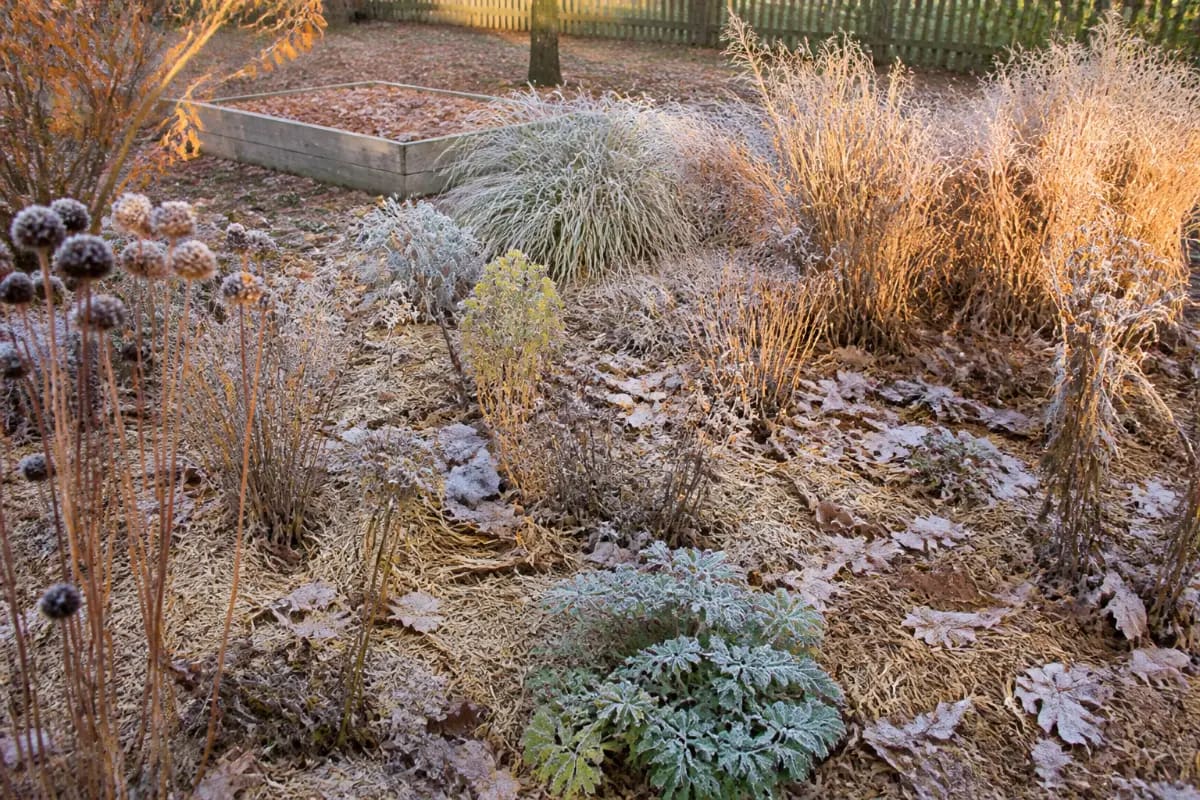
When the first hard frost blackens the zinnias and the tomato vines slump over, it's tempting to grab a rake and clear everything down to bare soil. Many gardeners were taught that a tidy fall garden is a healthy one. Today, most garden experts recommend a gentler approach.
This guide covers how to winterize your garden in a practical order: when to start, what to clean up and what to leave standing, how to put vegetable beds to rest, when winter mulch actually helps, and how to protect pots, hoses, and tools. The goal is simple: healthier plants and better soil next spring, with less work this fall.
Timing depends on where you live. In cold northern gardens, the work often happens in October and November. In mild southern regions, there may be little to winterize at all. If you're not sure what to expect, look up your zone on the USDA Plant Hardiness Zone Map, which is based on average winter low temperatures in your area.
A better signal than the calendar is your own garden. Most fall cleanup can start once a hard freeze has killed back the tops of your annuals and perennials. Winter mulch comes later still, once the soil itself begins to freeze. Doing everything on the first chilly weekend in September usually means extra work and less benefit.
Use these steps as a checklist. You don't need to do them all in one weekend, and you can skip any that don't apply to your yard.

Keep an eye on your local forecast as fall moves along. Your first light frost may only nip tender annuals, while a hard freeze ends the season for most of them. Write down the date of your first hard freeze each year. After a few seasons, you'll have a reliable timeline for your own yard, which is more useful than any national average.
Fall cleanup used to mean cutting every perennial to the ground. Now, extension services increasingly recommend a lighter touch. University of Illinois Extension encourages gardeners to leave some spent flower stems standing, because native bees nest in hollow stems and some butterflies spend the winter as pupae attached to dry stems. Seed heads on plants like coneflowers and sunflowers also feed birds through the winter.
The big exception is plants that had disease or insect problems this year. Remove and dispose of that material in fall so the problem doesn't overwinter in your garden.
The vegetable garden is the one place where a thorough cleanup really pays off. Iowa State University Extension recommends removing leaves, stems, fruit, and other plant parts after the first frost, because many diseases and pests overwinter on this debris and come back the next year. Healthy plant material can go in the compost. Diseased material should not, unless your pile gets hot enough (about 140°F) to kill pathogens, which most backyard piles don't.
Once a bed is clear, don't leave the soil bare all winter. You have two easy options:
Fall is a good time for a soil test, especially if you haven't had one in about three years. Testing now gives you time to correct problems before spring. Your local extension office can tell you how to collect a sample and where to send it.
Until you have results, compost is a safe addition for most beds. A layer of finished compost on the surface feeds soil life over winter and improves structure. Skip heavy fertilizing this late in the season unless your soil test calls for it.
Plants go into winter in better shape when their roots aren't dry. If your fall has been dry, give perennials, shrubs, and especially anything planted this year a deep soaking before the ground freezes.
In regions with dry, open winters, watering may need to continue. Colorado State University Extension advises watering during extended dry spells only when air and soil temperatures are above 40°F and there's no snow cover, at midday so the water soaks in before night. Late-planted perennials and those in windy or southwest-facing spots benefit most.
This step surprises many gardeners. Winter mulch isn't there to keep the soil warm. Its job is to keep frozen soil frozen. Repeated freezing and thawing can push shallow-rooted perennials up out of the ground, a problem called frost heaving, which exposes their roots to cold, drying air.
According to Iowa State University Extension, about 4 inches of mulch over the crowns after the ground freezes helps prevent frost heaving. Tender perennials and anything planted in late summer or early fall may need a deeper layer of 6 to 8 inches. Shredded leaves, straw, and pine needles all work well.
Two cautions: don't mulch too early, because it can delay dormancy and leave plants more vulnerable to cold, and don't bury perennial crowns under thick, wet mats of whole leaves. Pull winter mulch back gradually in early spring as the soil thaws.
The last step protects your gear:
If the steps feel like a lot, spread them across the season like this:
Deciding what to cut back is easier when you sort plants into two groups.

Leaving stems in place also traps leaves and snow, giving crowns a little extra protection. Iowa State notes that this debris can even help shallow-rooted perennials resist frost heaving.
Bag diseased material or take it to a municipal composting site if your community has one. Don't add it to a backyard compost pile.
Some popular summer bulbs and tubers, such as dahlias, cannas, and gladiolus, can't survive winter in the ground in cold climates. If you garden where the ground freezes, dig them up after frost blackens the foliage, let them dry, and store them in a cool, frost-free place. In warmer zones, many of these can stay in the ground with a layer of mulch.
Raised beds drain well and warm up early in spring, but with their sides exposed to cold air, their soil can freeze sooner than ground-level beds. A few extra steps help:
For more ideas on keeping beds and paths in shape year-round, see our guide to keeping your yard and garden neat and tidy.
In mild-winter regions, "winterizing" looks different. You may grow cool-season vegetables all winter, and many perennials never go fully dormant. Focus on clearing diseased plants, keeping soil covered with mulch or a cover crop, and watching the forecast for occasional frost. On cold nights, cover tender plants with frost cloth or an old sheet, then remove it in the morning. Heavy winter mulch usually isn't needed.
If you're building a full-season routine, our simple garden maintenance checklist shows how fall tasks fit with spring and summer care.
Start fall cleanup after your first hard freeze kills back annuals and perennial foliage. Add winter mulch to perennial beds later, once the soil begins to freeze. Exact timing depends on your region.
Not all of them. Healthy perennials can stay standing until early spring to protect their crowns, feed birds, and shelter beneficial insects. Cut back and remove plants that had disease or pest problems.
Yes, in a light layer. Leaves insulate roots and shelter overwintering insects. Avoid thick, wet mats over perennial crowns, and shred leaves first if you're using them as mulch on vegetable beds.
Only in dry winters with little snow. Water when air and soil temperatures are above 40°F and the ground isn't frozen, at midday, and focus on new plantings.
Whether you call it putting the garden to bed or preparing your garden for winter, learning how to winterize your garden is mostly about doing the right things at the right time. Clean up vegetable beds and diseased plants thoroughly, leave healthy perennial stems and leaves for wildlife, cover bare soil, water before the freeze, and mulch once the ground is cold. A little thoughtful work this fall sets you up for a stronger, easier start next spring.


